for immediate release
Updated
Contact Michael
Mack
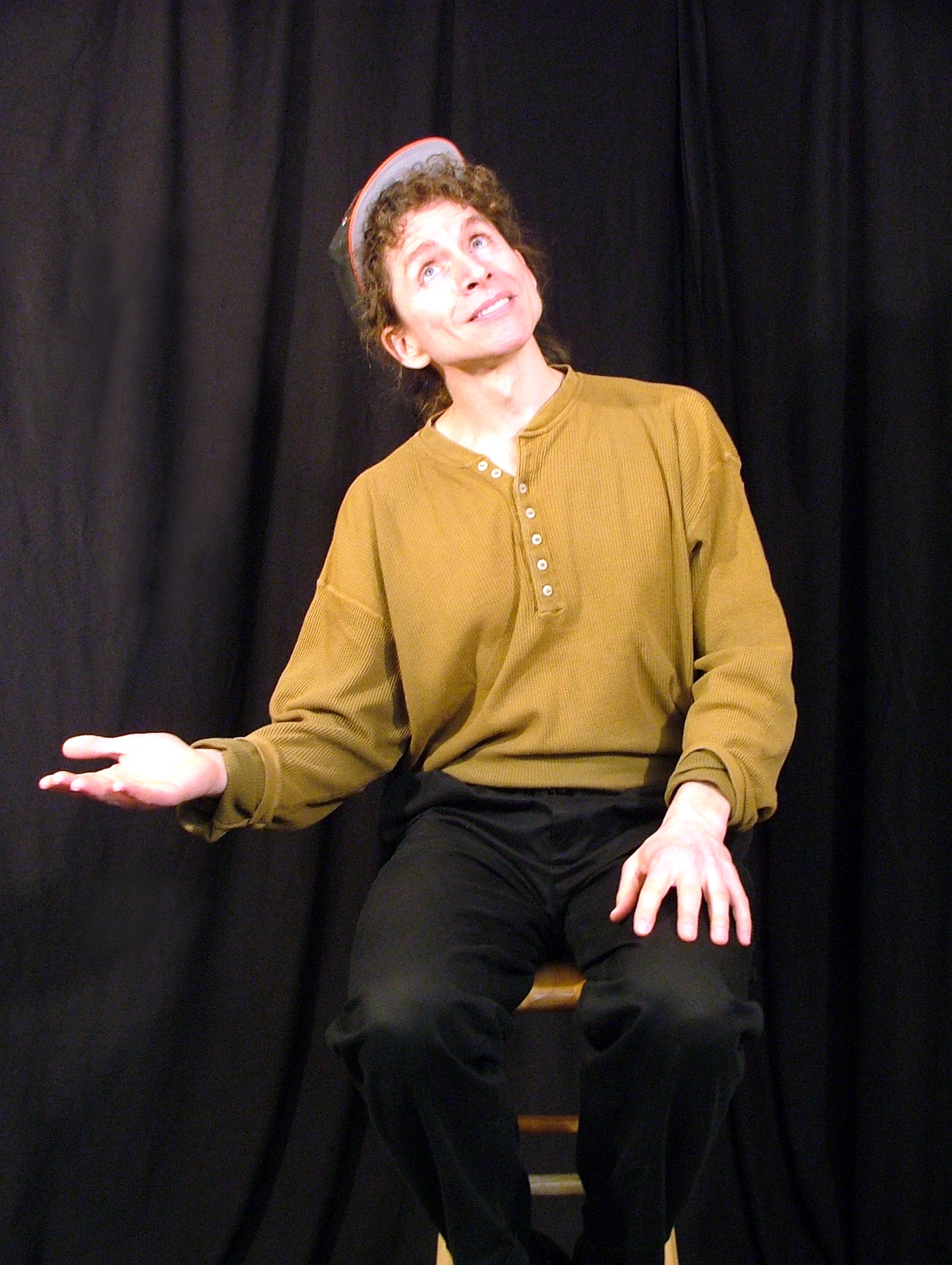
double-click image for hi-res | credit: timothy hanson
MIT poet finds lyric
in mother's schizophrenia
performs nationally-acclaimed solo show
For over a decade, Boston-based solo performer Michael Mack has been preaching a kind of gospel. The good news? His mother's recovery from schizophrenia, as told in his one-man play Hearing Voices, Speaking in Tongues.
Mack was five years old when his mother was diagnosed with paranoid schizophrenia, and his 80-minute performance chronicles her decades-long odyssey through psychosis into redemption.
Directed by Daniel Gidron, this award-winning production has played nationwide at venues that include the US Library of Congress, Foxwoods Resort, Off-Off-Broadway at the Times Square Arts Center, and for faculty and students of the Harvard Medical School.
Written in collaboration with his family, Mack's multi-character monologue gives voice to his mother and the voices that haunt her, as well as his father and other family members as they navigate a devastating reality.
The play follows Mack's mother through state hospitals, halfway houses, jails, and homelessness until she finds recovery through an unexpected grace. In the blurred landscape between madness and religious illumination, Hearing Voices, Speaking in Tongues is one family's journey of deliverance.
"My mother's illness profoundly shaped me," Mack said. "For decades I felt shadowed by it, afraid I'd get sick too." He explained that mental illness is more common than most people know. One in every five families is affected by major mental illness. One in every twenty people will suffer a clinical breakdown sometime in their lives.
"Whenever I do this show," he said, "people come up afterward telling me about their own mother's illness, or their father's, their sister's, their son's." Increasingly recognized as a brain disorder with physiological roots, mental illness is more common than cancer, diabetes, or heart disease.
Mack thinks of the show as "a kind of calling. It chose me." After serving in the US Air Force, Mack enrolled at MIT's prestigious Sloan School of Management, expecting to major in business science. He took a poetry class for elective credit -- "I needed an easy A" -- but the course changed his life. Childhood memories poured onto the page as poems.
Encouraged by his mentor, Pulitzer Prize-winning poet Maxine Kumin, and by Nobel Prize-winning poet Seamus Heaney, Mack changed majors and graduated from MIT's Writing Program.
His poems went from the page to the stage when he discovered poetry slam. In Boston's thriving poetry scene, Mack became a poetry slam champion, and represented Boston at the National Poetry Slam in 1998 and 1999.
An audience member at a Cambridge venue invited Mack to share his work at a local affiliate of the National Alliance on Mental Illness (NAMI). Word spread, and soon he was presenting at statewide and national mental health conferences for NAMI and other mental health organizations.
His is in demand especially during National Mental Health Month (May) and Mental Illness Awareness Week (in October), using the annual observances to raise public awareness about mental illness, and to help reduce misunderstanding and stigma.
In additional to traditional theatrical engagements -- including a six week run Off-Off-Broadway -- Mack now performs regularly for mental health professionals and consumers, including those with chronic illness at state hospitals.
"He channels his mother," said Dr. Laurence Guttmacher, chief of psychiatry and acting clinical director at the Rochester Psychiatric Center. "This is not an easy crowd," Guttmacher said of his patients. "But they were rapt. Afterward, they said, 'He gets it. He understands.'"
Excerpts from Hearing Voices, Speaking in Tongues have been published in the Journal of the American Medical Association (JAMA), America, the Beloit Poetry Journal, and Best Catholic Writing, and they have aired on NPR. The play was awarded a development grant from the Massachusetts Cultural Council -- the state's prestigious award for new theater works.
Asked about A Beautiful Mind, the Oscar-winning film about MIT Professor and Nobel Laureate John Nash, whose brilliant career in mathematics was cut short by schizophrenia, Mack said, "The movie's strength is that it portrays someone with mental illness in more than the usual stereotype. It brought mental illness squarely into the public discussion."
"But it's a Hollywood movie with a romantic Hollywood ending. Recovery from schizophrenia doesn't usually bring a Nobel Prize – though maybe it should – and recovery means more than just returning to a conventional life. For as long as my mother lived, she needed special care. But she recovered in the sense that after years of living on the streets and in state hospitals, she found stability and dignity in a community that loved her for who she was."
hearing voices boston 2010
April 6, 2010
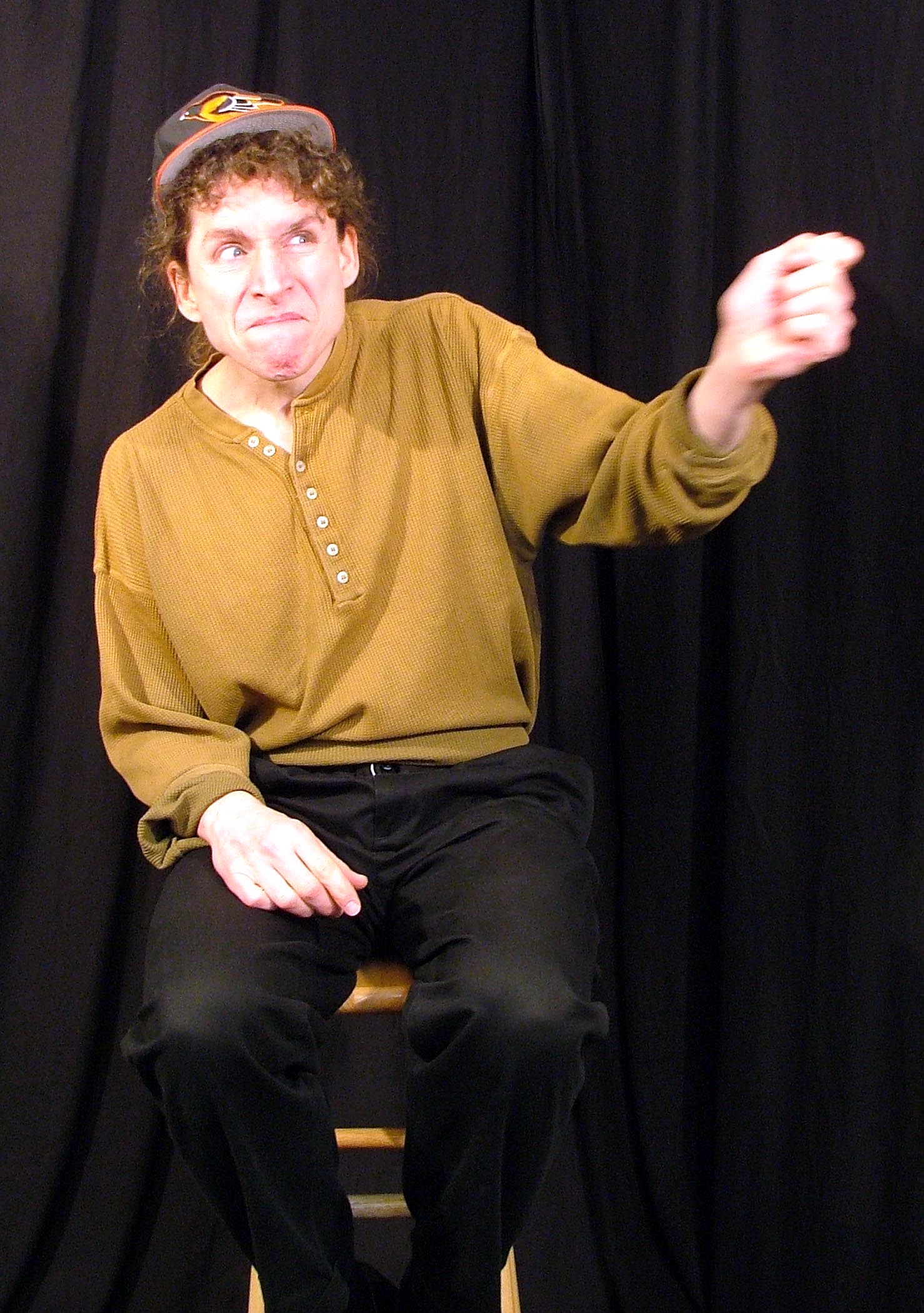
double-click image for hi-res | credit: timothy hanson
past press release
one-man play campaign
presses need for mental health services
When Michael Mack was five, his mother chopped off her hair and walked him to the school bus believing she was the Virgin Mary.
As she cried uncontrollably Mack boarded the bus alone, and another boy asked, "Who was that man with you crying so hard?" Mack insisted he did not know.
He wasn't kidding. Mack's mother had recently been diagnosed with paranoid schizophrenia.
This scene from Mack's one-man lyric drama Hearing Voices, Speaking in Tongues opens the story of his life with his mother, who spent decades in and out of state hospitals, halfway houses, jails and homelessness until she found a remarkable recovery in a state-funded group home.
Mack is performing eight (8) engagements in different New England venues in April and May of 2010 to honor his mother's life and recovery, and to focus attention on the ongoing need for mental health services in a time of budget cuts.
Michael Mack – who for over a decade has toured nationally with his acclaimed multi-character one-man show – portrays the helplessness and embarrassment, but also the joy and love he knew as a child growing up with a parent diagnosed with a major mental illness.
In partnership with the National Alliance on Mental Illness (NAMI) of Cambridge/Middlesex, Saint Paul Catholic Church, the Grolier Poetry Bookshop, and many other organizations, Mack is launching this campaign of shows in April and May (National Mental Health Month) to underscore how mental illness affects patients and their families, and how state funding can help.
One out of every five families has a family member with a major mental illness, Mack said. Mama wouldn't have found the recovery she had without help from state agencies and programs like those now facing cuts. Millions of families depend on these services for their loved ones.
In his 90-minute lyric memoir, Mack plays himself, his mother, her doctor, his father, and even Frank Sinatra (Mack's mom was a fan) portraying his family's decades-long struggle until his mother found recovery in an outstanding state-supported group home.
Hearing Voices, Speaking in Tongues began with a poetry class Mack took while enrolled at MIT's Sloan School of Management. His mentor, Pulitzer Prize-winning poet Maxine Kumin, as well as his poetry teacher Nobel Laureate Seamus Heaney, encouraged his efforts to write about life with his mother. He abandoned the business track and graduated from MIT's Writing Program concentrating in poetry.
Excerpts from Hearing Voices, Speaking in Tongues have been published in the Journal of the American Medical Association, the Beloit Poetry Journal, and Best Catholic Writing. He has performed at the U.S. Library of Congress, Off-Off-Broadway at the Times Square Arts Center, as well as at Harvard, Yale, and at scores of universities, state and private hospitals (including McLean in Belmont), and statewide and national conferences for mental health professionals and consumers.
Engagements include: St. Paul's Catholic Church, Cambridge MA (April 12 & May 14); Blacksmith House, Cambridge MA (April 16); Crotched Mountain Rehabilitation Center, Greenfield NH (April 22); Be Live, Cambridge MA (April 25); Poet to Poet, Somerville MA (May 4); Pierre Menard Gallery, Cambridge MA (May 6); Somerville Museum, Somerville MA (Mothers Day, May 9); and the Chelmsford Public Library, Chelmsford MA (May 22). Tickets are $15 each.